
The Complete Product Manager’s Technique Arsenal: From Discovery to Delivery
Issue #232


In today's edition, among other things:
💜 A Fresh Start: What’s Coming for Product Art in 2026 - Editor’s note (by Alex Dziewulska)
💜 The Complete Product Manager’s Technique Arsenal: From Discovery to Delivery (by Alex Dziewulska)
💪 Interesting opportunities to work in product management
🍪 Product Bites - small portions of product knowledge
🔥 MLA week#36
Join Premium to get access to all content.
It will take you almost an hour to read this issue. Lots of content (or meat)! (For vegans - lots of tofu!).
Grab a notebook 📰 and your favorite beverage 🍵☕.
Editor’s Note by Alex 💜
A Fresh Start: What’s Coming for Product Art in 2026
If you’re reading this, you survived another year of stakeholder whiplash, roadmap theater, and pretending AI will solve problems you haven’t bothered to understand yet. Congratulations. I mean that sincerely.
Look, I’m not going to pretend last year wasn’t hard. For many of us—myself included—it was a year of losses, pivots we didn’t choose, and the kind of exhaustion that doesn’t disappear after a long weekend. If you spent parts of 2025 wondering whether you’re still cut out for this work, whether the industry has lost its mind, or whether anyone actually knows what they’re doing... you’re in good company.
So here’s my wish for you in 2026: May your stakeholders read your documents before the meeting. May your metrics actually measure what matters. May you find at least one colleague who gets it. And may this year bring more moments of genuine impact and fewer exercises in corporate performance art.
We’re all figuring this out together. That’s not weakness—that’s the truth of building products in a world that keeps changing faster than our planning cycles.
Now, let me tell you what we’re building to make this year better for all of us.
The End of One Cycle, The Beginning of Something Better
Our Product Operating Model series is wrapping up. If you’ve been following along with pieces on strategic DNA and the roadmap paradox, you know we’ve been dismantling some sacred cows around how product organizations actually function versus how they pretend to function.
What’s next? A guest author is taking the wheel for a fresh cycle—details coming soon. And for the rest of 2026, we’re launching a year-long deep dive into product leadership. Not the LinkedIn-polished, “here’s my framework” variety. The real stuff: how to make decisions when everything is ambiguous, how to protect your team from organizational dysfunction, how to build something meaningful when the incentives are stacked against you.
We’re doing this because the world doesn’t need more AI-generated listicles about “10 ways to prioritize your backlog.” It needs honest conversations about what actually works.
Monthly Community Meetings Are Back
Every month this year, we’re gathering for 90-minute practitioner sessions—30 minutes of substance on a topic, followed by a full hour of real discussion with people who do this work every day. First one in February, details soon!
Here’s our planned lineup:
Product Discovery
Product Research
Product Strategy
Product Metrics
Product Experiments & Validation
AI in Product Management
That’s six topics. I need six more from you. What do you actually want to dig into? What’s keeping you up at night? Hit reply and tell me—the best suggestions will make the calendar.
Four Free Trainings for the Community
We’re kicking off February 12th with a 4-hour workshop on Lean Inception—a discovery method that actually helps teams align on what to build and why before they waste months building the wrong thing.
Link to workshop: Join!!!
Free for newsletter subscribers. Three more trainings throughout the year. Because if we’re going to complain about the state of product management education, we should probably do something about it.
New Format: Video and Podcast Episodes
Let’s be honest—sometimes you don’t want to read another 2,000 words. You want to listen while you’re commuting, walking, or pretending to pay attention in a meeting that should have been an email.
One issue per month will be available in video or podcast format. We’re bringing in guests and our regular authors to talk through concepts from the product space. Same substance, different delivery. It’s experimental ideal let us know what you think!
Speaking at Product Hive and Product Pro Summit
Our team will be on stage at both conferences this year.
What do you want us to talk about? We can bring the research-backed contrarian takes, the practical frameworks, or the honest conversations about what’s broken. Your call—reply and let us know what would actually be useful.
Coming Soon: PM Career Support
Here’s an idea we’re testing: a dedicated feature focused on product manager career growth. Not generic advice about “building your personal brand.” Actual support for navigating promotions, transitions, skill development, and the moments when you’re wondering if you should stay in this field at all. Evaluate and grow your product management skill set.
This is experimental. We want to see if it resonates before we invest heavily. Let us know if this matters to you.
For Teams: A Deal Worth Considering
Buy your team a yearly subscription (at least 10 members) and get:
A 4-hour training session for your team (choose from discovery, research, strategy, product operating model, or workshops) - 4h training, materials and microlearning for your team
Entry into a drawing for a full-day commercial training (choose from discovery, research, strategy, product operating model, or workshops, leadership) - 8h training, materials, take-home exercises, 2h dedicated mentoring for your team and microlearning
If you’re a leader trying to level up your product org without subjecting them to death-by-PowerPoint corporate training, this might be your move.
One More Thing
Check out destare.ngo—it’s still a work in progress, but we’re building something there that I think you’ll find valuable. More materials coming soon.
Here’s to a year of building things that matter, with people who give a damn.
See you in the community meetings.
— Alex
P.S. Seriously—reply with your topic suggestions for the monthly sessions. This community is better when you shape it.
And some words for Tuesday :)
The Bespoke Leader: Why Generic Leadership Advice Never Fits
Walk into any department store and grab a suit off the rack. It might fit. Sort of. The shoulders are close enough, the sleeves almost reach your wrists, and if you don’t move too much, nobody will notice it’s not quite right.
That’s what most leadership advice feels like to me.
I’ve spent fifteen years watching brilliant product people contort themselves into leadership shapes that don’t fit. They read the books, attend the workshops, memorize the frameworks—and then wonder why they feel like imposters wearing someone else’s clothes. The $80 billion leadership development industry keeps selling the same promise: follow these universal principles, master these competencies, and you’ll become an effective leader.
Here’s the uncomfortable truth the industry doesn’t want you to hear: the research says that’s mostly nonsense. Meta-analyses across decades of leadership studies find that leader traits and behaviors explain only about 31% of variance in effectiveness. The rest? Context, individual differences, timing, and yes—luck. We’ve built an entire industry on the assumption that leadership is a transferable formula when the evidence screams that it’s actually a deeply personal craft. And we’re paying the price. Only 7% of senior managers (CEO) believe their companies develop leaders effectively. Just 24% of executives rate leadership programs as successful. Those numbers should make us furious—or at least curious about what we’re getting wrong.
Let me take you into the research for a moment, because what scholars have found should fundamentally change how we think about leadership development.
A landmark 2023 review in the Academy of Management Annals examined ten major leadership styles—transformational, authentic, servant, ethical, charismatic—and identified a critical flaw the authors called “valence-based conflation.” Basically, we’ve been specifying leadership behaviors as inherently good or bad without accounting for context. The researchers concluded this weakness “calls into question the entire evidence base of leadership style research.”
That’s not a minor critique. That’s questioning the foundation of everything we’ve been taught.
It gets worse. Van Knippenberg and Sitkin’s devastating 2013 analysis of charismatic-transformational leadership—you know, the stuff that dominates every leadership book on the airport bookshelf—identified four fundamental problems: fuzzy definitions, weak causal models, confusing leadership with its effects, and invalid measurement tools. Their recommendation? The current approach should be “abandoned.”
Ralph Stogdill settled this debate decades ago with a finding the industry has conveniently ignored: “Leadership exists between persons in a social situation, and persons who are leaders in one situation may not necessarily be leaders in other situations.” What makes you effective leading a scrappy startup team might make you terrible leading an enterprise transformation. The context changes everything.
So why do we keep pretending otherwise?
Here’s where it gets interesting. The Big Five personality research offers precise insights into why you need to find your own way rather than copying someone else’s.
Judge and colleagues analyzed 222 correlations across 73 samples and found that extraversion, conscientiousness, and openness all correlate with leadership effectiveness—but here’s the catch: these relationships shift dramatically based on context. In business settings, openness and extraversion dominated. In government and military contexts, conscientiousness emerged as the strongest predictor. Updated 2024 research found that in collectivist cultures, agreeableness becomes significantly more important.
What does this mean for you? Different traits suit different contexts and different leadership styles. Authoritative leadership works best for those high in extraversion but low in agreeableness. Democratic leadership suits those high in agreeableness and openness. The most effective leaders understand their trait profile and adapt accordingly rather than fighting their nature.
Bill George, the former Medtronic CEO who interviewed over 390 leaders for his research on authentic leadership, captured this beautifully: “Authentic leadership is built on your character, not your style... Previous generations of business people spent more time trying to ‘market’ themselves as leaders, rather than undertaking the transformative work that leadership development requires.”
The foundation of this personalized approach? Self-awareness. And here’s where it gets humbling. Organizational psychologist Tasha Eurich found that 95% of people believe they’re self-aware, but only 10-15% actually meet the criteria. We’re all walking around thinking we know ourselves when most of us are operating on autopilot.
The leaders who figure this out—who invest in truly understanding their own psychology—create massive advantages. Companies with more self-aware people perform better financially. Leaders who overrate themselves have subordinates with lower job satisfaction and higher turnover intentions.
Self-awareness isn’t soft stuff. It’s the hard foundation everything else builds on.
I know what you’re thinking. “But what about learning from the greats? Shouldn’t I study what Jeff Bezos or Satya Nadella did and apply those lessons?”
Behavioral science has a clear answer: be very, very careful.
The culprit is survivorship bias—our systematic tendency to focus on successes while ignoring the vastly larger population of failures. Nassim Taleb calls this hidden data “silent evidence,” and its concealment distorts our entire understanding of what drives success.
Consider this: for every Bill Gates or Mark Zuckerberg, thousands pursued similar strategies with similar conviction and failed. Forbes reports 90% of startups fail, yet business schools celebrate unicorns as models to emulate. The successful survivors are anomalies at one end of a distribution curve, not exemplars of reproducible strategy.
Daniel Kahneman’s research makes this even more uncomfortable. He discovered what he calls the “illusion of validity” during his army service. His team would emerge from leadership evaluations with clear, confident judgments about candidates’ potential. Then they’d compare their predictions to actual officer school performance. The correlation? Negligible. Despite knowing their predictions failed, they continued feeling confident in new predictions.
Kahneman’s observation should be required reading for anyone in product leadership: “Because luck plays a large role, the quality of leadership and management practices cannot be inferred reliably from observations of success.” He noted that companies celebrated in books like Built to Last and In Search of Excellence subsequently regressed to the mean.
That brilliant strategy you’re trying to copy? It might have been a stupid decision that worked out well and became brilliant in hindsight.
The critique extends beyond theory to the institutions profiting from generic leadership advice.
Barbara Kellerman, founding executive director of Harvard Kennedy School’s Center for Public Leadership, describes the industry as “self-satisfied, self-perpetuating, and poorly policed.” Programs “tend to proliferate without objective assessment.”
Jeffrey Pfeffer of Stanford went further in Leadership BS, calling the industry built on precepts “based more on hope than reality, on wishes rather than data, on beliefs instead of science.” The gap between idealistic teachings and organizational reality leaves aspiring leaders “unprepared to deal with organizational realities.”
McKinsey’s research documented four critical mistakes that should sound familiar to anyone who’s sat through corporate leadership training. First, overlooking context—programs create “alphabet soup” competencies instead of focusing on what matters for specific challenges. Second, decoupling reflection from real work—adults retain only about 10% of classroom content versus 66% when learning by doing. Third, underestimating mindsets—programs address behaviors but avoid changing underlying beliefs. Fourth, failing to measure results—organizations pay “lip service” to development without evidence of ROI.
Here’s the hopeful part: research shows personalized approaches actually work. Organizations investing in personalized development through coaching and mentoring see 40% better employee retention and promotions happening 20% faster. Executives surveyed by HBR Analytics rate coaching 60% effective compared to just 35% for traditional skills training.
The solution exists. We’re just not using it.
So what does this mean for you?
The central metaphor holds. Generic leadership advice fits like an off-the-rack suit—adequate for some, uncomfortable for most, genuinely excellent for almost no one. The research convergence across multiple disciplines is striking: academic critiques of universal models, personality science documenting irreducible individual differences, behavioral economics explaining why copying fails, industry analysis documenting billions wasted on standardized approaches, and case studies of leaders who succeeded by being themselves.
There is no “right way” to lead that everyone should follow. The Level 5 leaders Collins identified succeeded through humble resolve, not charisma. The introverted CEOs who built trillion-dollar companies succeeded by leveraging reflection and careful analysis. The empathetic transformers succeeded through genuine human connection.
Each found their own way. You need to find yours.
This doesn’t make leadership development easier—it makes it harder. It requires the uncomfortable work of self-examination rather than the comforting embrace of proven formulas. It means acknowledging that luck plays a larger role than we prefer to admit, and that what made one leader successful may be precisely wrong for you.
Here’s your challenge this week:
Stop consuming generic leadership content for seven days. Instead, spend that time on three questions: What leadership situations energize you versus drain you? What feedback do you consistently receive about your impact on others? When have you been most effective as a leader, and what was true about you in those moments?
The answers won’t come from a book or a framework. They’ll come from honest self-reflection—the kind the leadership industry has convinced us we can skip.
Your leadership style shouldn’t look like anyone else’s. It should fit you perfectly—every measurement tailored to your unique psychology, personality, strengths, and circumstances.
That’s not a limitation. That’s your competitive advantage.
Now go get fitted.
Supporting Kasia Dahlke’s Research
Kasia, a 5th-year psychology student at WSB Merito University in Gdańsk, is conducting research for her master’s thesis on stress and coping styles in the IT industry (age group 35-50). Her research connects powerfully with Alex’s argument today: just as generic leadership advice doesn’t fit everyone, generic stress management strategies don’t work either. Understanding your personal stress patterns and coping mechanisms is as crucial as understanding your leadership style—both require the self-awareness that Tasha Eurich found only 10-15% of people actually possess.
Important: The study especially needs male participants to balance the research sample.
If you work in IT and fall within this age range, the survey takes about 10 minutes: https://lnkd.in/dEBCH9qK
If you don’t meet the criteria, every share helps—especially to male colleagues in IT. Alex writes that meta-analyses explain only 31% of leadership effectiveness through traits and behaviors—the remaining 69% includes factors like stress resilience, self-awareness, and personal coping strategies. Kasia’s research might help us understand those missing variables. Because you can’t apply the 24 frameworks in this week’s arsenal effectively if you don’t understand how stress affects your decision-making patterns.
💪 Product job ads from last week
Do you need support with recruitment, career change, or building your career? Schedule a free coffee chat to talk things over :)
Senior Product Manager - Cint
Product Manager - TTC Group
Product Manager - 360Learning
Product Manager - Oppizi
Product Manager - Pencil
🍪 Product Bites (3 bites 🍪)
🍪 The Endowment Effect: Why Users Won’t Let Go of Legacy Features
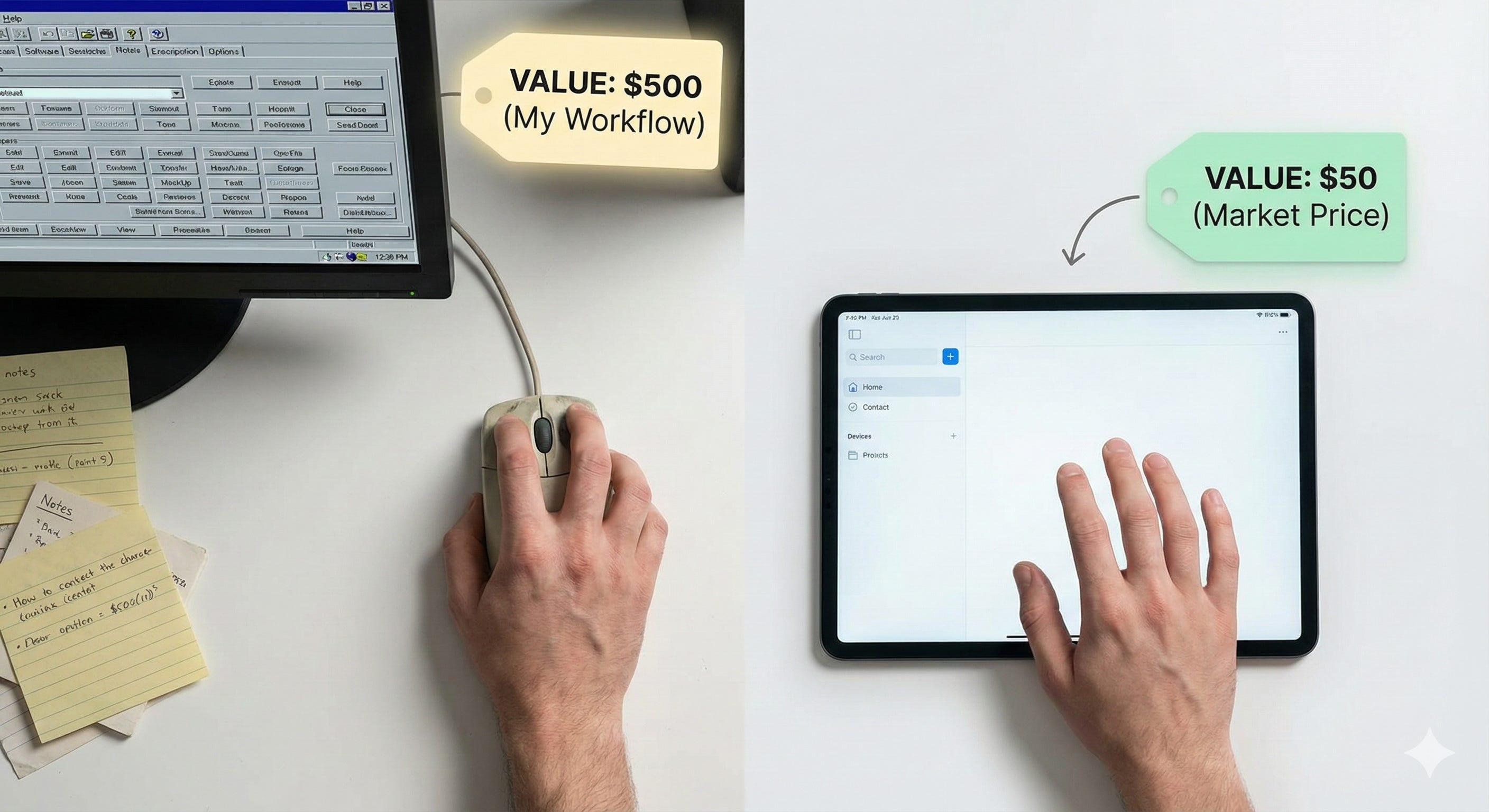
Understanding attachment to outdated functionality and managing deprecation
Here’s a reality that every product manager eventually confronts: users will fight tooth and nail to keep features you know are terrible. They’ll petition, they’ll threaten to churn, they’ll write passionate forum posts about how removing a clunky workflow will “ruin everything.” This isn’t irrationality—it’s the Endowment Effect in action. This cognitive bias makes people value things they already own far more than identical things they don’t. In product development, this means that legacy features users have adopted become psychologically “theirs,” and taking them away feels like theft, even when you’re offering something objectively better.
Behavioral economist Richard Thaler demonstrated this effect brilliantly in 1980 with coffee mugs. He gave participants mugs, then offered to buy them back. Owners demanded an average of $7.12 to part with their mugs. Meanwhile, non-owners were only willing to pay $2.87 for identical mugs. The act of possession increased perceived value by 2.5x. The same dynamic plays out in software: a feature users have invested time learning becomes worth far more to them than the same feature would be worth to new users evaluating it fresh.
The Psychology of Digital Ownership
The Endowment Effect isn’t about the feature itself—it’s about the relationship users have developed with it. Every workflow learned, every customization configured, every habit formed creates psychological ownership. Users don’t just use features; they incorporate them into their identity and work processes. Removing a feature isn’t just changing your product; it’s disrupting their life.
Research from Duke University shows that the Endowment Effect is strongest when three conditions align: effort invested, successful outcomes associated with the item, and lack of identical alternatives. This explains why deprecating features in productivity tools is so explosive. Users have invested hours learning keyboard shortcuts, achieved important work using specific workflows, and can’t easily replicate their exact setup elsewhere. The perfect storm for maximum attachment.
Twitter learned this lesson brutally with their 2019 attempt to remove the “retweet with comment” feature temporarily. Despite data showing the feature was used by only 3% of users and contributed to harassment, the backlash was immediate and fierce. Why? That 3% had built their entire Twitter presence around commentary retweets. The feature wasn’t just a button—it was their identity on the platform. Twitter reversed course within 48 hours.
The LEGACY Framework for Deprecation
Managing the Endowment Effect requires more than good communication—it requires understanding what users are actually attached to. The LEGACY framework helps navigate this:
L - Learn the Emotional Investment Before deprecating anything, understand not just usage metrics but emotional attachment. When Microsoft decided to remove Clippy (the infamous paperclip assistant), they didn’t just look at satisfaction scores—they analyzed the communities, memes, and nostalgia around it. They discovered that while users claimed to hate Clippy, they were emotionally invested in hating it. It had become part of Office’s identity. The lesson: attachment isn’t always positive, but it’s always real.
Slack experienced this with their “slackbot” customizations. Usage data suggested the feature was underutilized (7% of teams), but qualitative research revealed those 7% were extremely attached. They’d programmed inside jokes, team rituals, and cultural touchstones into slackbot. For them, it wasn’t a feature—it was a team member. Slack chose to maintain the feature despite low aggregate usage because emotional investment outweighed the numbers.
E - Establish Gradual Transitions Sudden deprecation amplifies the Endowment Effect by triggering loss aversion. Gradual transitions give users time to form new attachments before losing old ones. Adobe’s Creative Cloud migration exemplifies this approach. They didn’t just kill perpetual licenses—they ran them parallel for years, gradually shifting value to the subscription model. Users could maintain their “owned” licenses while building familiarity with the new system. By the time deprecation happened, many users had already emotionally migrated.
Google Chrome’s bookmark manager redesign (2015) failed because they violated this principle. They replaced the familiar manager overnight with a new system. Despite objective improvements, users revolted. The new system was “theirs” after one day, while the old system was “theirs” after years. Chrome rolled back and took two more years to transition properly, introducing the new manager as an option before making it default.
G - Give Superior Alternatives The Endowment Effect weakens when the replacement is clearly better, but “better” must be defined by users, not engineers. When Apple removed the headphone jack from iPhones, they misjudged user attachment. To Apple, wireless was objectively superior. To users, their existing headphones represented money spent and habits formed. The transition was painful because Apple didn’t adequately compensate for the endowment loss.
Contrast this with Figma’s replacement of their original prototyping system. They not only built a better system—they created automatic migration tools that preserved every prototype users had created. The new system wasn’t just superior; it included everything users were attached to. Adoption was 89% within three months because users didn’t feel they were losing anything.
A - Acknowledge the Loss Don’t gaslight users into thinking deprecation isn’t a loss. Even when you’re removing something objectively bad, it’s still a loss to people who’d adapted to it. GitHub’s removal of their “achievements” feature (2023) handled this well. They explicitly acknowledged: “We know some of you enjoyed this. Here’s why we’re removing it, and here’s what we learned from your usage that’s informing new features.” The acknowledgment didn’t prevent loss, but it validated users’ feelings.
When Dropbox deprecated their public folders feature, they faced massive backlash—not because the feature was beloved, but because they initially framed it as “rarely used” (dismissing user investment). After pushback, they changed their messaging to acknowledge that while usage was low, those who used it relied on it heavily. This shift from dismissal to acknowledgment reduced negative sentiment by 34% in community discussions.
C - Create Migration Incentives Reduce the perceived cost of switching by offering something valuable in return. When Evernote transitioned from unlimited devices on free plans to two devices, they didn’t just take away—they gave early adopters 40% off premium plans. This “compensation” acknowledged the endowment loss and helped users form new attachments to premium features.
Linear’s approach to deprecating their original notification system is instructive. They offered “power users” of the old system early access to the new one, making them feel valued rather than disrupted. These users became advocates for the new system, helping others through the transition. The endowment shifted from old feature to early-adopter status.
Y - Yield to Core Users Sometimes the right answer is not to deprecate. When Photoshop considered removing “Save for Web” in favor of “Export As,” they faced unexpected resistance. Professional web designers had muscle memory for that specific workflow. Adobe kept both options, despite the technical debt, because the endowment effect made the cost of removal higher than the cost of maintenance. User retention among web design professionals increased 12% after this decision.
The Grandfather Clause Strategy
One powerful approach to managing endowment is the “grandfather clause”—let existing users keep the feature while preventing new adoption. This acknowledges existing endowment while preventing new attachment formation. Gmail’s approach to their original Inbox app used this strategy. When they decided to deprecate Inbox, they stopped accepting new users two years before shutdown, then gradually migrated features to regular Gmail. By shutdown day, most active users had already formed new attachments.
Superhuman used a variation of this with their original pricing model. Early users were “grandfathered” at $25/month when new pricing went to $30. This preserved early adopters’ sense of ownership while allowing the product to evolve. Retention among grandfathered users was 97% over two years—far higher than standard rates—because their special status intensified endowment.
The Sunken Cost Amplifier
The Endowment Effect compounds with the Sunk Cost Fallacy—users who’ve invested heavily in learning a feature will defend it most fiercely. Notion’s relationship with their “Relation” properties demonstrates this. Power users who’d built complex databases with relations became the most vocal opponents of any changes to the system, not because the system was perfect, but because they’d invested hundreds of hours mastering it.
Notion’s solution was elegant: they grandfathered existing behavior while improving the system for new relations. Users could keep their complex setups while new users got simpler defaults. This acknowledged the endowment (”we value your investment”) while improving the product (”new users get better”). The approach reduced deprecation-related support tickets by 56%.
When Attachment Becomes Toxic
Not all endowment is healthy. Sometimes users are attached to features that actively harm them or others. Twitter’s relationship with algorithmic timeline is illustrative. When they introduced it in 2016, users revolted, demanding “chronological only.” Twitter provided the option, and many users clung to it. But data revealed chronological-only users were less engaged, saw more harassment, and missed important content. Their attachment to the “original” timeline was hurting their experience.
Twitter’s approach evolved over years: they made algorithmic default but allowed chronological, then gradually educated users on why algorithmic was better, then made switching between them easier. By 2023, voluntary algorithmic adoption was 78%. The lesson: sometimes you need to overcome endowment for users’ own good, but it requires patience and education.
Measuring Endowment Strength
Before deprecating features, assess endowment strength through:
Investment Indicators
Time to proficiency (longer = stronger endowment)
Customization levels (more = stronger endowment)
Integration into workflows (deeper = stronger endowment)
When Trello considered removing their power-up system, they analyzed not just usage but configuration complexity. Users with 5+ configured power-ups had endowment scores (measured by stated switching costs) 4x higher than users with 1-2. This data informed a segmented deprecation strategy.
Identity Integration Features users discuss in their professional identity (”I’m a Vim user”) have extreme endowment. Reddit communities are a goldmine for this research. When Sublime Text analyzed subreddit discussions, they found users self-identified with specific plugins and workflows. This influenced their decision to maintain plugin architecture backward compatibility across major versions—losing it would threaten user identity.
Emotional Language Analysis When users describe features with possessive language (”my shortcuts,” “our workflow”), endowment is high. ConvertKit’s analysis of customer interviews revealed that email sequences were described with ownership language 73% of the time, while broadcast emails were only 23%. This informed their strategic decision: sequences were untouchable for deprecation; broadcasts could be modified.
The Replacement Paradox
Here’s where it gets tricky: sometimes offering a replacement intensifies the Endowment Effect by highlighting what’s lost. When Google replaced Google Hangouts with Google Chat and Google Meet (splitting functionality), users weren’t grateful for “better” tools—they were angry about losing their integrated solution. The replacements made users acutely aware of what they’d lost.
The lesson: replacement features must preserve not just functionality but the specific value users had endowed in the original. Often that value is integration, simplicity, or familiarity—not features. When Sketch introduced “smart layout,” they were replacing manual layout work. But power users preferred manual control because they’d mastered it. Sketch’s solution: make smart layout optional and preserve manual workflows. Both groups kept their endowment.
The Deprecation Communication Pattern
How you announce deprecation matters as much as what you deprecate. The pattern that minimizes backlash:
Validate Before Explaining “We know many of you rely on this feature” before “Here’s why we’re removing it.” Validation acknowledges endowment; explanation provides logic. When done in reverse, users feel dismissed.
Quantify the Loss Be specific about what users will lose. Vagueness amplifies anxiety and endowment. When Mailchimp deprecated certain automation triggers, they told users exactly which automations would break and provided migration scripts. Specificity reduced support tickets by 41%.
Timeline with Milestones Give users control over when they transition. Basecamp’s classic-to-current migration allowed users to choose their timing within a two-year window. Users who controlled timing had 63% higher satisfaction than users forced to migrate.
Conclusion: Features Aren’t Things, They’re Relationships
The Endowment Effect reveals a profound truth: users don’t relate to features as tools—they relate to them as possessions, habits, and parts of their identity. Every feature in your product that users have learned and integrated into their workflow has been endowed with value far beyond its objective utility. This value is real, even when the feature is objectively inferior to alternatives.
The best product teams don’t see deprecation as removing features—they see it as managing relationship transitions. They understand that users aren’t irrationally clinging to bad features; they’re rationally protecting investments they’ve made in learning, configuring, and adapting. The attachment isn’t to the feature itself but to what the feature represents: time invested, competence achieved, workflows established.
Your legacy features aren’t technical debt—they’re emotional equity. The question isn’t whether users should be attached to them; they will be. The question is whether you’ve built systems to honor that attachment while still moving your product forward. Because in product development, the hardest features to remove aren’t the ones with the most code—they’re the ones with the most meaning.
The next time users revolt against a deprecation, don’t see resistance—see endowment. Don’t see irrationality—see investment. And don’t see obstacles—see opportunities to demonstrate that you understand what your product means to the people who use it. Because managing the Endowment Effect isn’t about convincing users to let go. It’s about showing them you know what you’re asking them to give up, and that you’ve built something worthy of their next attachment.
🍪 The Fresh Start Effect: Timing Product Launches for Maximum Adoption

Why Mondays, New Years, and birthdays are your secret weapons
There’s a reason gym memberships spike in January, diet apps surge on Mondays, and productivity tools boom after New Year’s. It’s not just marketing—it’s the Fresh Start Effect, a cognitive bias where temporal landmarks create psychological windows for behavior change. These moments—whether calendar-based (January 1st), personal (birthdays), or institutional (new jobs)—make people feel like they’re opening a “new chapter” where past failures don’t count and new behaviors feel possible. For product teams, understanding these moments means launching features, campaigns, and onboarding flows when users are most receptive to change.
Researchers Hengchen Dai, Katherine Milkman, and Jason Riis from Wharton demonstrated this effect through gym attendance data. They analyzed 165,000 visits and found attendance increased 33% at the start of new weeks, 14% at the start of new months, and 11% following birthdays and holidays. The effect isn’t about New Year’s resolutions being special—it’s about temporal landmarks creating psychological “reset buttons” that make change feel achievable. For product managers, this means timing isn’t just about market readiness; it’s about psychological readiness.
The Architecture of Fresh Starts
Fresh Start moments work because they create psychological distance from past behavior. When we think “new year, new me,” we’re not just being optimistic—we’re mentally separating our future self from our past self. This separation makes past failures feel less relevant and future goals feel more attainable. The old you struggled with productivity; but the new-year you? That’s a different person who can totally stick to a new task management system.
The effect is strongest when three elements combine: a clear temporal boundary, a sense of aspiration or self-improvement, and a break from routine. This is why Monday morning feels like a fresh start but Tuesday afternoon doesn’t. Monday has a boundary (weekend ended), aspiration (weekly goals), and routine disruption (returning to work structure). Tuesday continues Monday’s momentum. The boundary has closed.
Research from the Journal of Personality and Social Psychology shows that fresh start moments increase goal-directed behavior by 23-47% depending on the landmark’s significance. January 1st is the strongest (47% increase), followed by birthdays (31%), semester starts (28%), and Mondays (23%). For product teams, this creates a hierarchy of opportunity—some temporal landmarks are more powerful than others.
The MOMENT Framework for Strategic Timing
To leverage fresh starts effectively, product teams need to identify and target the right moments. The MOMENT framework structures this approach:
M - Map User Landmarks Different user segments have different temporal landmarks. B2B products should target fiscal year starts, quarter beginnings, and new hire onboarding. Consumer products should target calendar milestones. Duolingo analyzed user behavior and discovered language learning surges not just in January, but during travel booking season (spring), back-to-school (September), and after vacation returns. Each segment had unique fresh start triggers.
Headspace (meditation app) found that their Buddhist and mindfulness practitioner users had fresh starts around Bodhi Day, Vesak, and solstice celebrations—dates mainstream products ignore. By creating campaigns around these niche landmarks, they increased engagement in that segment by 41%. The lesson: fresh starts aren’t universal; they’re cultural and personal.
O - Orchestrate Launch Windows Don’t just launch when you’re ready—launch when users are receptive. Superhuman deliberately delayed their public launch to January (despite being “ready” in November) because they wanted the fresh-start momentum. Their waiting list signups in January were 3.2x higher than November forecasts. The product hadn’t changed; the timing had.
Notion’s launch of their personal use cases in September (back-to-school) rather than their original summer timeline was similarly strategic. Students and academics were in fresh-start mindset, reorganizing for new semesters. This timing contributed to viral adoption in education—their fastest-growing segment at the time.
M - Manufacture Micro-Moments You can create fresh starts within your product through psychological boundaries. Todoist does this brilliantly with their daily reset at midnight—completing yesterday’s tasks gives users a clean slate each morning. Their “Karma” system resets weekly, creating a Monday fresh start feeling. These manufactured moments increase daily engagement by 37% compared to continuous task lists with no resets.
Streaks and chains (like GitHub’s contribution graph) work inversely by creating fear of breaking the streak—but savvy products also build in “streak forgiveness” on fresh start days. Duolingo allows one “streak freeze” per week, typically used on Mondays when users restart their commitment. This acknowledges that fresh starts sometimes mean restarting after failure.
E - Enable Goal Setting Fresh start moments are when users are most receptive to setting goals. Spotify’s “Wrapped” campaign (December) isn’t just retrospective—it primes fresh start goal-setting for January. “You listened to 40 genres this year—discover new music in 2024” creates forward momentum. Their January engagement rates are 28% higher than other months, partly due to this priming.
LinkedIn’s approach to work anniversaries is instructive. They send “career milestone” notifications that aren’t just celebrations—they’re prompts for reflection and goal-setting. “3 years at Company X—where do you want to be in year 4?” This converts fresh start moments into product engagement opportunities. Profile updates increase 53% around work anniversaries.
N - Nurture New Habits The window after a fresh start is critical for habit formation. Provide intensive support during the 2-3 week post-landmark period. Calm (meditation app) increases notification frequency for new users who join in January, knowing fresh start motivation will wane. Their progressive guidance during this window increases 90-day retention by 41%.
Peloton’s approach to new bike deliveries treats each delivery as a personal fresh start. They immediately schedule a live welcome class, creating a social commitment that capitalizes on fresh start motivation. Users who take this welcome class within 48 hours have 67% higher long-term engagement than those who delay.
T - Track Landmark Patterns Analyze your cohorts by join date to identify fresh start patterns. Notion discovered that users who joined in January had 19% higher conversion to paid plans than August joiners—same product, different timing. This informed their marketing budget allocation: they now spend 40% more in Q4 to capture January fresh starts.
The Calendar of Opportunity
Different temporal landmarks serve different purposes:
Annual Landmarks (Highest Impact)
January 1st: Peak fresh start—increases goal-setting behavior by 47%
Birthdays: Personal fresh starts—increases self-improvement focus by 31%
New fiscal year: B2B opportunity—increases tool evaluation by 38%
When Asana analyzed their enterprise deal closings, they found 42% occurred in Q1, despite Q4 being traditional “budget spend” season. Why? January fresh starts motivated teams to “finally” implement the productivity system they’d been discussing. Asana now structures their sales cycle to create momentum in Q4 that converts in Q1 fresh start windows.
Monthly Landmarks (Medium Impact)
First of the month: Mini fresh start—increases subscription starts by 23%
Pay day: Resource refresh—increases premium upgrades by 18%
Month-end reviews: Reflection-driven change—increases account setting changes by 27%
Spotify positions premium trials to end just before month-start, knowing that monthly fresh starts make users more likely to convert. “Start the new month with premium” performs 34% better than “3 days left on your trial” despite containing identical information. The framing leverages the fresh start.
Weekly Landmarks (Consistent Impact)
Mondays: Strongest weekly fresh start—increases app opens by 23%
Sundays: Planning day—increases goal-setting actions by 19%
Friday afternoons: Week-end closure—increases completion rates by 16%
Trello analyzed card creation patterns and found Sunday evenings had the highest “new board” creation rate—users planning their week. They introduced a “weekly template” feature specifically for Sunday fresh starts, which became their most-shared template category with 340,000+ copies made.
Personal Landmarks (Highest Emotional Impact)
New jobs: Career fresh start—increases productivity tool adoption by 58%
Relationship changes: Life restructuring—increases personal organization tool usage by 44%
Moving homes: Geographic fresh start—increases local service adoption by 51%
When Notion integrated with LinkedIn to detect job changes, they began sending “new role, new workspace” prompts. This seemingly small trigger increased workspace creation by 62% among users with recent job changes—a fresh start moment they’d been missing.
The Anti-Pattern: False Fresh Starts
Not all boundaries create genuine fresh starts. Manufactured urgency (”Last chance!”) without meaningful landmarks feels manipulative. When Groupon tried creating daily “fresh start” deals, users became fatigued—every day being “special” made nothing special. Their most successful campaigns returned to true landmarks: “New Year, New Experiences” outperformed daily urgency by 3x.
The distinction is authenticity. True fresh starts align with users’ natural psychological boundaries. False fresh starts try to create urgency without meaning. “New year, new you” resonates because January actually feels different. “Day 237 of the year, new you” doesn’t.
Implementation Tactics Across Product Stages
Pre-Launch: Choose Your Moment If you control launch timing, choose fresh start alignment. ProductHunt launches perform 43% better on Mondays than Wednesdays because Monday hunters are in discovery mode. Y Combinator companies launching during Demo Day benefit from investor fresh start mindset (new batch, new opportunities). The product is identical; the receptivity differs.
Growth Stage: Fresh Start Triggers Build functionality around fresh start moments. MyFitnessPal’s “restart your journey” feature (prominently featured on Mondays) acknowledges that users often fall off and need fresh starts. Rather than treating this as failure, they embrace it as natural behavior. This feature reduced churn by 23% by providing psychological permission to restart.
Mature Products: Anniversary Campaigns Use product anniversaries as manufactured fresh starts. Slack’s “Slackiversary” notifications aren’t just cute—they create reflection moments that prompt users to evaluate and optimize their workspace. Configuration changes increase 47% during slackiversary weeks compared to baseline.
The Timing of Feature Releases
Fresh start thinking applies to feature launches too. Releasing major updates right before fresh start landmarks increases adoption:
Pre-Holiday Launches Release two weeks before holidays when users are preparing for fresh starts. Notion’s template gallery expansion in mid-December positioned templates for January fresh starts. Template usage increased 127% in January—users discovering them in December, implementing them in January.
Avoid Fresh Start Competition Don’t launch during peak fresh start windows if you’re competing for attention. January sees 300+ productivity apps launching—you’re competing with user decision fatigue. August and September (back-to-school fresh start) often provides better opportunity with less competition.
Sequence Within Fresh Starts Position your product early in the fresh start sequence. Users typically commit to 3-5 new behaviors during major fresh starts. Being the first commitment increases long-term adoption. This is why financial apps push hard December 26-31: they want to be part of the January 1st fresh start, not a competing later addition.
Measuring Fresh Start Impact
Track these metrics to understand your fresh start leverage:
Temporal Cohort Analysis Segment users by join date and compare behavior. Headspace found Sunday joiners had 31% higher 90-day retention than Wednesday joiners—Sunday fresh start motivation carried through. They now offer Sunday-specific onboarding flows emphasizing weekly practice establishment.
Landmark Conversion Rates Test conversion tactics across temporal landmarks. Canva discovered that their “start creating” CTA performed identically most days but 56% better on Mondays. They now dynamically adjust their homepage copy based on day of week, with Monday emphasizing fresh starts and mid-week emphasizing workflow continuity.
Motivation Decay Curves Map how fresh start motivation fades. Duolingo tracked that January joiners show peak engagement for 17 days, then steep decline. This informed their notification strategy: intensive support during days 1-17, then “revival” campaigns targeting day 30 (monthly fresh start) to recapture lost momentum.
The Shadow Side: Fresh Start Fatigue
Over-leveraging fresh starts creates cynicism. Users learn that “new year, new me” often becomes “same old me by February.” Products that oversell fresh start transformation risk association with failure. Better Health (therapy app) deliberately avoided New Year’s resolution messaging because they wanted users to see therapy as ongoing work, not fresh start magic.
The solution is authentic persistence messaging: “Fresh starts begin change, but daily commitment sustains it.” Habitica (habit gamification) treats fresh starts as checkpoints in longer journeys, not as magic moments. This framing reduced early churn (when fresh start motivation fades) by 28% by setting realistic expectations.
Conclusion: Time Is a Product Feature
The Fresh Start Effect reveals that timing isn’t just about when you’re ready to launch—it’s about when users are psychologically ready to adopt. Temporal landmarks create windows of opportunity where behavior change feels possible, where new tools feel compelling, and where commitment feels achievable. These windows exist whether we leverage them or not. The question is whether we’re designing for them deliberately.
The best product teams think of time as a design element, not just a constraint. They recognize that a feature launched on Monday morning lands differently than the same feature launched Thursday afternoon. They understand that January brings users who are fundamentally more open to change than June users, even though the product is identical.
Your product doesn’t just compete on features, pricing, or design—it competes for users’ capacity for change. And that capacity fluctuates based on temporal landmarks. Fresh starts don’t just make change feel possible; they make your product feel like the right choice for this new chapter.
The next time you plan a launch, don’t just ask “when can we ship?” Ask “when will users be most ready to change?” Because in product management, being early isn’t always better. Sometimes the best time to launch isn’t when you’re ready—it’s when your users are opening a new chapter and looking for tools to write it with. That’s not manipulation. That’s empathy translated into timing. And in a world where behavior change is hard, every advantage matters—especially the ones written in the calendar.
🍪 The Reciprocity Principle in Freemium: Give to Get
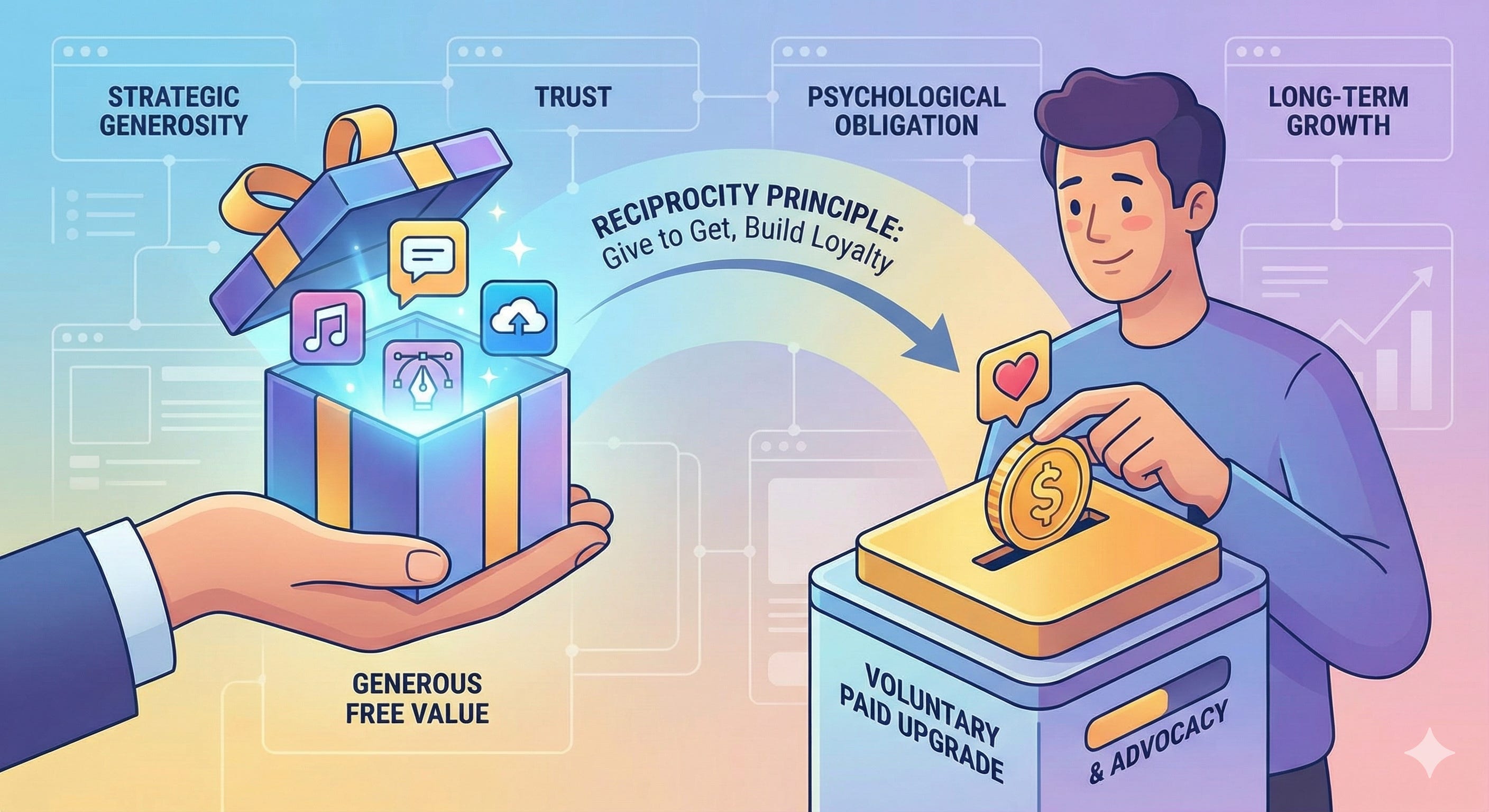
Building loyalty through strategic generosity in product design
Every successful freemium product understands an ancient truth: when someone gives you something valuable for free, you feel a subtle but powerful obligation to give something back. This is the Reciprocity Principle—one of the most fundamental social norms in human psychology. When Spotify lets you listen to millions of songs without paying, when Slack gives small teams unlimited messaging, when Notion provides robust functionality at no cost, they’re not just being generous. They’re triggering a psychological mechanism that makes you want to reciprocate, even when there’s no explicit obligation. The key insight? The gift must feel genuinely valuable, not like a manipulative hook.
Anthropologist Marcel Mauss documented this principle in his 1925 study of gift economies across cultures. He found that gifts create social bonds through three obligations: to give, to receive, and to reciprocate. When a gift is given freely (not transactionally), the recipient feels compelled to maintain balance in the relationship. Modern freemium products leverage this ancient dynamic: they give first, generously, and trust that a percentage of recipients will feel moved to give back through conversion to paid plans, referrals, or advocacy.
The Psychology of Generous Giving
The Reciprocity Principle works because humans are hardwired for social equilibrium. When someone gives us something valuable, we experience mild psychological discomfort until we reciprocate. This isn’t conscious calculation—it’s instinctive. Research by Robert Cialdini showed that waiters who give customers mints at the end of meals see tips increase by 23%. Two mints? Tips increase by 28%. And if the waiter gives one mint, starts to walk away, then “decides” to give another because “you’ve been such nice customers,” tips increase by 42%. The perceived generosity, not the value, drives reciprocity.
For product teams, this means freemium generosity must be perceived as genuine giving, not calculated baiting. Dropbox’s original 2GB free tier felt generous in 2008 (when competitors offered 100MB). The generosity wasn’t just storage—it was the signal that Dropbox trusted users with substantial value upfront. This trust triggered reciprocity: users wanted to support a company that had supported them. By contrast, when products offer crippled free tiers with constant upsell prompts, users feel manipulated rather than gifted. The reciprocity instinct doesn’t activate—instead, resentment builds.
The timing matters too. Reciprocity is strongest when the gift comes before any request. Products that lead with value, then later mention paid plans, activate reciprocity. Products that show pricing immediately, then provide limited free access, feel transactional. Calendly’s freemium model demonstrates this: they let users schedule unlimited meetings for months before ever suggesting paid features. By the time users see pricing, they’ve received hundreds of dollars worth of value. The conversion isn’t a sale—it’s reciprocity.
The REWARD Framework for Strategic Generosity
Not all free features create reciprocity. The gift must be genuinely valuable, timely, and contextually appropriate. The REWARD framework helps design generosity that converts:
R - Real Value First Give users something they actually need, not a teaser of what they could have. Figma’s approach is exemplary: their free tier isn’t “Figma lite”—it’s full-featured design capability limited by scale (3 files). Solo designers and students get complete value. They’re not stuck wanting features; they’re grateful for capability. When they need more files or collaboration, upgrading feels like reciprocating, not paying to remove restrictions.
Contrast this with Adobe’s traditional approach: free trials of full products that expire. Users experience value, then it’s taken away. This creates resentment, not reciprocity. They learned this lesson and shifted Creative Cloud Express to a genuinely valuable free tier with premium enhancements, not locked core features.
E - Exceptional Without Expectations The gift must feel unconditional. Canva’s design genius is giving away templates, graphics, and tools that would cost hundreds elsewhere—with no immediate ask. Users create projects, succeed with them, and only then encounter premium content suggestions. The reciprocity is pre-built: “They gave me all this, I should support them.” Their 40% conversion rate from free to paid (industry average is 2-5%) partly reflects this reciprocity-driven loyalty.
When products immediately limit exports, add watermarks, or restrict core workflows, users feel trapped, not gifted. Loom learned this: their original free plan limited videos to 5 minutes. Users felt constrained, not grateful. When they shifted to unlimited videos with privacy controls as the upgrade, reciprocity activated. Conversion improved by 34%.
W - Whisper, Don’t Shout When you do mention paid plans, do it quietly and contextually. Notion’s upgrade prompts are masterfully subtle. You hit a limit (like file upload size), and they simply note: “Need more space? Check out our personal pro plan.” No interruption, no manipulation, just information when relevant. This respects the gift—it doesn’t weaponize it. Users appreciate the restraint, which amplifies reciprocity.
Compare this to products with persistent “upgrade now” banners on free accounts. MailChimp’s heavy upgrade pressure on free plans created community backlash. Users felt the “gift” was actually a constant sales pitch. They’ve since softened their approach, with noticeable improvement in brand sentiment.
A - Amplify Through Surprise Unexpected generosity triggers stronger reciprocity than expected features. Slack’s surprise raises to message history limits (10K to 90 days) didn’t just improve the product—they created reciprocity moments. Teams that thought they’d need to upgrade suddenly didn’t, creating gratitude debt. When they later did upgrade (for other features), the decision felt like supporting a generous partner, not buying a service.
Notion does this brilliantly with their “personal use is free forever” pivot in 2020. Users who’d been paying $4/month suddenly didn’t need to. This counterintuitive generosity created massive goodwill and word-of-mouth. Many users voluntarily upgraded to paid plans they didn’t need because they wanted to reciprocate the generosity.
R - Reciprocity Isn’t Just Money Accept non-monetary reciprocation. When Superhuman couldn’t offer a free tier (due to cost structure), they leaned into other reciprocity forms: detailed feedback, testimonials, referrals. Users who received high-touch onboarding felt compelled to reciprocate through advocacy, even at $30/month. Their referral program converts 4x industry averages partly because it’s structured as reciprocity (”We gave you great service, help us grow”) not transaction (”Get $10 credit for referrals”).
Linear’s approach to public roadmap voting creates reciprocity through participation. Free users can shape the product’s future—a valuable gift of voice. When these users upgrade, they’re reciprocating the respect Linear showed by listening. This emotional investment drives their remarkably low churn (under 3% monthly).
D - Deepen Over Time Increase generosity as users invest more. Grammarly’s free tier improves as you write more—their AI learns your style and provides increasingly personalized suggestions. The value grows with tenure, making the reciprocity debt compound. Users who’ve benefited from years of free service become the most loyal paid subscribers because the accumulated gift feels substantial.
Spotify’s free tier does this through personalization. Your first week on Spotify Free is generic. Six months in, Discover Weekly knows you better than you know yourself. The value has compounded, and the reciprocity obligation has grown. When users upgrade, they often cite this accumulated personalization value—”Spotify has given me so much, I want to support them.”
The Dark Side: Manipulative Reciprocity
Reciprocity can be weaponized, and users know it. Dark patterns that exploit reciprocity create resentment:
The Bait-and-Switch Offering valuable features, getting users hooked, then moving them to paid tiers. Dropbox’s reduction of free space through changed referral programs felt like taking back a gift. The reciprocity reversed—users felt betrayed, not obligated. Evernote’s progressive limitation of their free tier similarly damaged goodwill. Both companies saw community sentiment crash.
The Guilt Trip Explicitly invoking reciprocity (”We’ve given you so much, don’t you think you should upgrade?”) destroys the magic. Reciprocity must emerge naturally, not be demanded. Wikipedia’s donation drives successfully avoid this trap by framing contributions as sustaining a public good, not repaying a debt.
The Fake Gift Trial extensions, “special offers,” and artificial discounts don’t trigger true reciprocity because they’re not genuine gifts—they’re sales tactics. LinkedIn’s constant “Premium trial” offers created banner blindness, not gratitude. Real reciprocity requires real generosity.
Measuring Reciprocity Impact
How do you know if your generosity is creating reciprocity?
Voluntary Upgrade Patterns Notion tracks users who upgrade before hitting limits—these are reciprocity conversions. They’re not buying features they need; they’re supporting a product they value. This segment has 97% retention compared to 78% for need-based upgrades. Reciprocity converts create loyal customers, not just paying ones.
Referral Quality Users driven by reciprocity refer more authentically. Superhuman measures “organic advocacy”—users who write detailed recommendations without referral incentives. These reciprocity-driven referrals convert 3x better than incentivized ones because authenticity shows.
Feature Request Sentiment When users request paid features, do they frame it as “I need this so I can pay you” or “you should charge for this”? The latter indicates reciprocity—users want you to monetize so they can reciprocate. Figma’s forums are full of users suggesting features Figma could charge for, motivated by desire to support the company.
Downgrade Patterns Users feeling reciprocity are less likely to downgrade during financial stress. They’ll cut other subscriptions first. Notion’s COVID-19 churn analysis revealed that users who’d started on free plans and upgraded were 40% less likely to downgrade during economic uncertainty than direct paid signups. The reciprocity bond survived financial pressure.
Strategic Generosity Across Product Stages
Early Stage: Maximum Generosity When building initial user base, err toward excessive generosity. Airtable’s completely free tier with nearly full functionality established market presence and created reciprocity momentum. Their subsequent paid tiers felt like upgrades, not unlocks. This foundation enabled sustainable growth—users wanted them to succeed.
Growth Stage: Sustained Value As you scale, maintain the perception of generosity even while optimizing monetization. Calendly’s addition of paid features never reduced free tier value—they added new capabilities upmarket. Free users never felt anything was taken away, preserving reciprocity. Their 30% paid conversion rate (extraordinarily high) reflects this preserved goodwill.
Mature Stage: Legacy Generosity Established products can leverage history. Slack’s message “we’ve given you 5 years of free team chat” creates compound reciprocity. Long-term free users converting to paid often cite relationship history, not just current features. They’re reciprocating years of value.
The Asymmetry of Reciprocity
Here’s what makes reciprocity powerful in freemium: the perceived value of your gift often exceeds its cost to you. Spotify giving a free user access to millions of songs costs Spotify very little (marginal cost near zero), but feels enormously valuable to the user. This asymmetry—low cost to you, high value to them—creates profitable reciprocity.
Figma’s design files stored on their servers cost them cents per user, but to designers, having cloud design tools felt like hundreds of dollars of value. When users upgrade, they’re reciprocating $300 of perceived value by paying $15/month. The reciprocity is disproportionately valuable because digital marginal costs allow generous giving.
This explains why SaaS freemium works better than physical goods freemium. Giving away software costs little; giving away physical products costs a lot. The reciprocity can’t be disproportionate if your costs are linear.
Building Reciprocity Into Product Culture
The most successful freemium companies make generosity a cultural value, not just a business model:
Stripe’s Documentation Their free, comprehensive docs and tools (like Stripe CLI) serve developers whether they use Stripe or not. This generosity creates industry goodwill that converts to business—developers want to work with the generous company. Their NPS among developers who’ve never processed a payment is 68—pure reciprocity.
Figma’s Config Conference Free, world-class design conference content. Non-customers benefit equally. This builds design community goodwill that translates to product advocacy. Attendees become ambassadors because Figma gave without asking for anything in return.
Notion’s Template Community They highlight user-created templates, giving creators exposure. This generosity to creators creates a virtuous cycle—creators reciprocate by building more, which makes Notion more valuable, which attracts more users. Everyone reciprocates.
When Not to Use Reciprocity
Some business models don’t suit reciprocity-driven freemium:
High Variable Costs If serving free users costs significant money, reciprocity economics break down. Superhuman’s concierge onboarding costs ~$50 per user. Free tiers would create resentment when only 2-5% reciprocate, leaving the business subsidizing 95%+ forever.
Low-Differentiation Markets If competitors offer similar free value, reciprocity doesn’t create preference—just table stakes. Email clients all offer free plans; no one feels reciprocal obligation to Gmail specifically. The gift isn’t special enough.
Enterprise Focus B2B buyers aren’t swayed by reciprocity the way individuals are. Enterprise sales are rational, not emotional. Salesforce’s minimal free tier reflects this—they don’t need individual reciprocity, they need budget approval.
Conclusion: Generosity as Strategy, Not Tactic
The Reciprocity Principle reveals that the most powerful freemium products aren’t optimizing for conversion funnels—they’re building relationships through genuine giving. They understand that when you give users substantial value freely, expecting nothing in return, a percentage will feel compelled to reciprocate. Not because they’re manipulated, but because reciprocity is fundamental to human social behavior.
The best product teams design generosity into their core value proposition. They don’t ask “what’s the minimum we can give away?” but “how much value can we provide sustainably?” They recognize that every free user receiving genuine value is a potential advocate, a possible paid customer, and a member of their community worth serving.
Your freemium model isn’t just a pricing strategy—it’s a statement about your relationship with users. Are you giving them value because you trust reciprocity will follow? Or are you baiting them into paid conversion? Users can feel the difference. One creates loyalty, advocacy, and sustainable growth. The other creates churn, resentment, and constant customer acquisition treadmills.
The next time you design freemium features, don’t think about what you’re willing to give away. Think about what gift would make users feel genuinely grateful. Think about what generosity would make them want to support you, not because they have to, but because they want to. That’s not just good business—it’s the kind of relationship worth building. Because in product management, the companies that give the most generously often receive the most loyalty in return. That’s not karma. That’s reciprocity, properly understood.
🔥 MLA #week 36
The Minimum Lovable Action (MLA) is a tiny, actionable step you can take this week to move your product team forward—no overhauls, no waiting for perfect conditions. Fix a bug, tweak a survey, or act on one piece of feedback.
Why it matters? Culture isn’t built overnight. It’s the sum of consistent, small actions. MLA creates momentum—one small win at a time—and turns those wins into lasting change. Small actions, big impact
MLA: Metrics Translation
Why This Matters:
Product teams live and breathe metrics—activation rates, retention curves, conversion funnels, DAU/MAU ratios. But for someone in marketing, finance, HR, or operations, these numbers can feel like a foreign language, creating an invisible barrier that separates product from the rest of the organization. When only product people understand product metrics, decisions get made in isolation, priorities get misaligned, and other departments struggle to see how their work connects to product success. By translating one key metric into language anyone can understand, you democratize data, build shared understanding of what success looks like, and empower others to contribute meaningfully to product outcomes. This small act of translation can transform how your organization thinks about product impact.
How to Execute:
1. Choose the Right Metric:
Select one metric that is genuinely important to your product success AND would benefit from broader organizational understanding:
Good candidates:
Activation rate (what percentage of new users complete key setup steps)
Time-to-value (how quickly users experience the product’s core benefit)
Feature adoption rate (what percentage of users try a specific feature)
Retention rate (what percentage of users come back after their first session)
Net Promoter Score or customer satisfaction metrics
Core conversion metrics (free-to-paid, trial-to-customer)
Avoid:
Vanity metrics that don’t drive real decisions
Metrics so technical they require deep product knowledge to be useful
Metrics that are politically sensitive or confidential
The best metric to translate is one where you’d genuinely benefit from another department’s perspective or collaboration.
2. Select the Right Person:
Choose someone who:
Works in a different department (marketing, sales, finance, ops, customer success, HR)
Has a natural connection point to the metric (e.g., marketing for activation, CS for retention)
Is curious and open to learning
Could potentially help improve the metric from their unique vantage point
Examples:
Explain activation rate to a customer success person who onboards clients
Explain retention to a marketing person who drives acquisition campaigns
Explain feature adoption to an operations person who trains users
Explain conversion metrics to a finance person who models revenue
3. Frame the Invitation Properly:
Make it a learning exchange, not a lecture:
Good invitation: “Hey @Maria, I’m trying an experiment to make our product metrics more accessible across teams. Would you have 15 minutes this week for me to walk you through what ‘activation rate’ means and why we obsess over it? I’d also love to hear your perspective on it from the customer success angle—you probably see things we miss.”
What makes a good invitation:
Positions it as mutual learning, not one-way teaching
Acknowledges their expertise matters
Specific time commitment (15-20 minutes)
Genuine curiosity about their perspective
4. Prepare Your Translation:
Before the conversation, prepare to explain:
a) What the metric measures (in plain language): ❌ “DAU/MAU ratio tracks daily active users divided by monthly active users” ✅ “This tells us what percentage of people who tried our product this month actually use it daily—it’s our ‘stickiness’ score”
b) Why it matters (business impact): ❌ “It’s a key engagement metric” ✅ “If this number is low, it means people sign up but don’t find enough value to come back. That’s wasted acquisition money and missed opportunities to help customers”
c) What moves it (levers and factors):
What makes the number go up or down
What your team is doing to improve it
What blockers or challenges you face
d) Current state (context):
Where you are now
Where you want to be
Why the gap matters
Prepare one simple visual:
A chart showing the trend over time
A simple diagram showing how it’s calculated
A before/after example (Keep it simple—one slide or one sketch)
5. Execute the Conversation with Intention:
Structure the 15-20 minute conversation:
Minutes 1-5: Set context
“Our product’s success depends on this metric because...”
Share why you chose to explain this one to them specifically
Minutes 5-12: Explain and translate
Walk through what it measures (plain language)
Show your simple visual
Explain what moves it and why it’s hard
Share a real example or story that illustrates it
Minutes 12-20: Invite their perspective
“From your work in [their department], what do you see that might affect this?”
“Does anything surprise you about how we measure this?”
“What questions do you have?”
“Is there anything from your area that we should be tracking related to this?”
Take notes on their questions and insights—they’ll often surface blind spots.
6. Follow Up and Reinforce Learning:
Within 24 hours after the conversation:
Send a thank you message with a one-page summary of what you explained
Share one insight or question they raised that made you think differently
Offer to be a resource: “If this metric ever comes up in your work, feel free to ping me”
After one week:
Share an update on the metric: “Remember that activation rate we discussed? We just ran an experiment that moved it from 23% to 28%—thought you’d want to see the impact!”
This reinforces that their learning matters and creates ongoing connection around shared goals.
Expected Benefits:
Immediate Wins:
One person now understands what drives product success
Costs zero budget and takes 20 minutes
Creates concrete shared language between departments
Often surfaces insights or questions product team hadn’t considered
Builds your skill at explaining complex concepts simply
Relationship & Cultural Improvements:
Breaks down the “data priesthood” mentality—metrics aren’t mysteries
Makes other departments feel included in product success
Creates natural touchpoints for future collaboration
Builds trust through transparency about what matters and why
Demonstrates that product team values other perspectives
Long-Term Organizational Alignment:
Other departments start thinking about how their work impacts product metrics
Creates foundation for data-driven collaboration across functions
Reduces misalignment caused by different departments optimizing for different things
Builds organizational capability to understand and discuss product performance
Makes it easier to rally cross-functional support when metrics need improvement
Establishes practice of explaining “why” behind decisions, not just “what”
Let us know how it went and what insights emerged! Use the hashtag #MLAChallenge to share your story. Let’s inspire each other to make data everyone’s language.
📝 The Complete Product Manager’s Technique Arsenal: From Discovery to Delivery
Most product failures stem not from poor execution but from working on the wrong problems. Organizations waste billions building features nobody wants because they skip systematic discovery, ignore customer reality, and optimize for internal assumptions rather than external validation. The difference between feature factories shipping outputs and outcome-driven teams creating value lies in strategic application of proven techniques grounding decisions in behavioral science and customer evidence.
This comprehensive guide synthesizes 24 essential product management techniques across discovery, strategy, metrics, customer experience, and operations—each grounded in cognitive science principles from Kahneman, Ariely, Thaler, and Clear that explain why these methods work when applied correctly and fail when treated as checkbox exercises.
Part I: Discovery & Validation - Finding What Actually Matters
1. Opportunity-Solution Trees: Navigating from Outcomes to Validated Solutions
Teresa Torres created OST as visual structure for continuous product discovery, connecting business outcomes to tested solutions through validated customer opportunities. The framework prevents teams from jumping directly from business goals to feature specifications without understanding underlying customer needs—the most common cause of product failure.
The Four-Level Structure:
Outcomes (Root): Measurable business value you want to create—product outcomes reflecting customer behavior, not lagging business metrics. “Increase weekly active users by 25%” not “Increase revenue by $1M.” Outcomes must be measurable, time-bound, and within team influence.
Opportunities (Middle Layer): Customer needs, pain points, and desires driving the outcome. Torres uses “opportunity” not “problem” because products address desires
